
The finance minister's assertion that industry should not expect any spectacular announcements in the 2024 interim Budget suggest that the electoral imperatives of more tax concessions or higher expenditure on welfarist programmes could be far less pronounced than they were before the 2019 interim Budget, expects A K Bhattacharya.

IDFC believes that for a sustainable 8% annual growth in GDP, Indian roads need to keep pace with a 9% growth.

GDP growth of 7.7 per cent in the first half of this fiscal has "left sceptics gasping and woefully behind the curve", an RBI article said on Wednesday. It also stressed the buildup in the growth momentum is likely to be sustained. The article on the state of the economy published in the Reserve Bank's December Bulletin on Wednesday also said CPI-based retail inflation is expected to ease to 4.6 per cent in the first three quarters of 2024-25 from 5.6 per cent in November.

Describing the "lower agriculture output" as the "immediate challenge", Nomura said it could be a drag on GDP in the next quarter and on rural consumption. "But we expect urban consumption to rebound due to better job prospects," it said.

Growing at a robust rate due to economic reforms in key sectors like digitisation and infrastructure, India has emerged as a star performer and is projected to contribute more than 16 per cent of the global growth, the International Monetary Fund said on Monday. "What we have been observing for quite some time now is that India has been growing at a very robust rate. "It's one of the star performers when it comes to real growth when you look at peer countries.

India is poised to be the third largest global economy by 2030 but rising population presents mounting challenges in basic service coverage and growing investment needs to maintain productivity, S&P Global Ratings said on Thursday. It said emerging economies have high ambitions for the next decade and beyond with India aiming to become a $30 trillion economy by 2047, from the current $3.6 trillion. India is currently the fifth largest economy.

'The retail industry is still growing in double digits.'

Global financial services firm Nomura has sharply lowered India's growth forecast for this fiscal to 5.8 per cent, way below the government's projection, saying the country's monetary and fiscal policies are at loggerheads.

'If it doesn't, it will continue with measures to infuse liquidity, signalling a new cycle,' predicts Tamal Bandyopadhyay.

The most striking features of this Budget was its focus on simplification and improving the ease of doing business in India, asserts Kaku Nakhate.

Around 67 per cent respondents see the rupee to be at or below 60 for FY'15.

From the 30-share pack, Adani Port, Bharti Airtel, Asian Paints, IndusInd Bank, Bajaj Finserv, Reliance Industries, Infosys, UltraTech Cement, HDFC Bank, HCL Technologies and ICICI Bank were among the laggards. Tata Motors, Axis Bank, Maruti, Larsen & Toubro, ITC and Tata Steel were among the gainers.

'Challenge is basically near-term growth as the outlook has turned a bit adverse.'
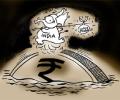
Dealers attributed the fall in rupee to dollar's gains against euro overseas
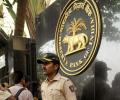
The downward surprise in Q2 stemmed from a stronger-than-anticipated drag from gross fixed capital formation and marginal weakness in private final consumption expenditure. In Q3, projection errors emanated mainly from a steep unanticipated contraction in gross fixed capital formation, which was the deepest in the new series of GDP.
